Luminary Tutoring
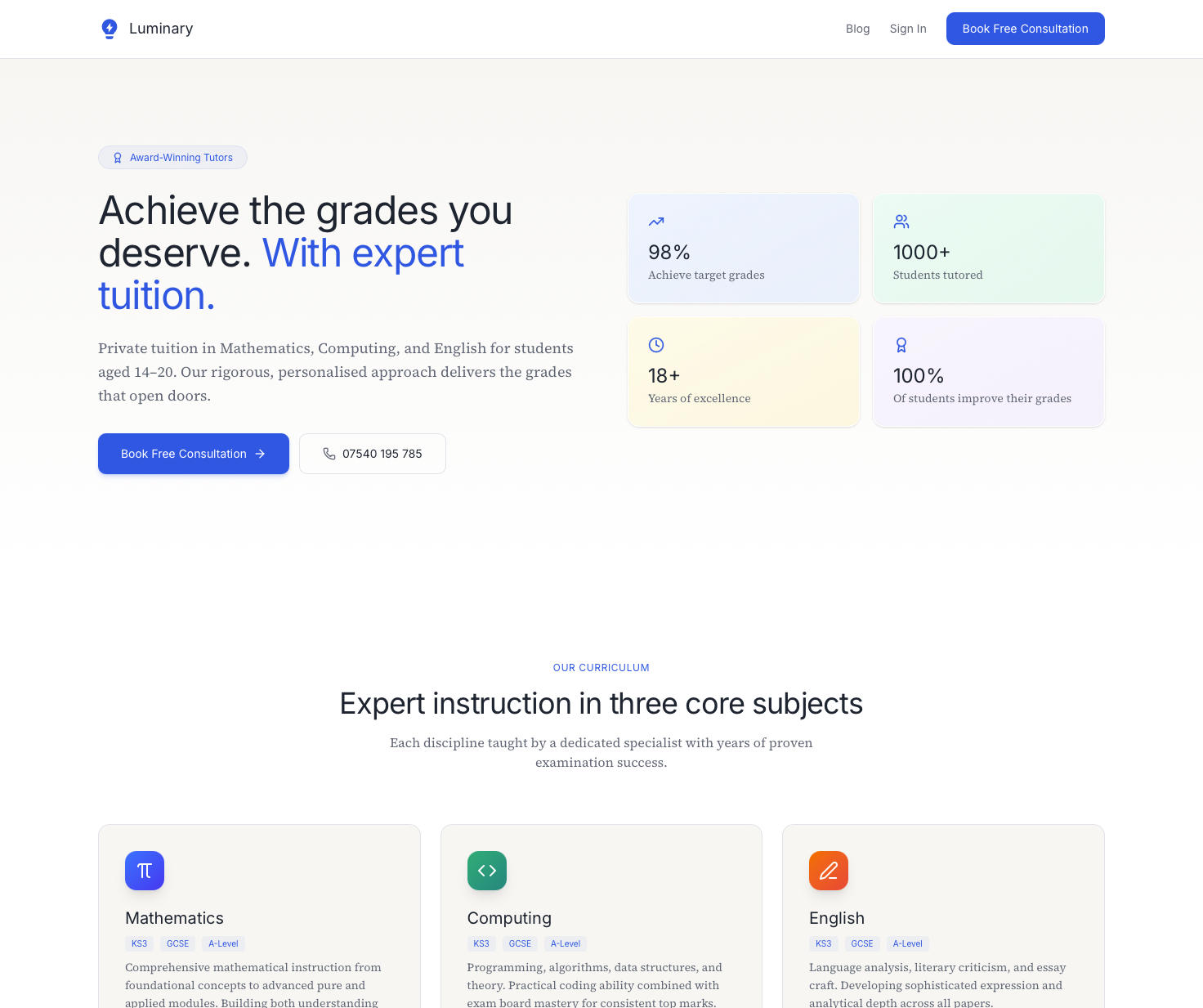
Luminary Tutoring is a private practice offering GCSE and A-Level tuition in Maths, English, and Computer Science. Sessions are exam-board specific and built around the way each student actually thinks, with progress tracked across the run-up to exam season.
The Concept (A Business Perspective)
Running a premium tutoring side-business on weekends shouldn't mean spending weeknights drowning in administrative tasks or managing fragmented marketing tools.
Instead of stitching together expensive SaaS subscriptions (such as student management tools, email campaign managers, and blog hosting platforms), I built a custom, unified system. The goal was simple: automate client onboarding, recurring direct-debit billing, and marketing content generation on a single, self-hosted platform—keeping overhead low and freeing me up to focus on teaching.
The Developer Perspective: The Tech Stack
I chose a modern, type-safe stack designed for reliability, fast page loading, and minimal runtime cost:
- Core Platform: Next.js (App Router) and TypeScript for server-side rendering, giving the public blog an immediate SEO advantage, paired with Tailwind CSS for a clean, responsive layout.
- Data & Authentication: PostgreSQL coupled with a type-safe database layer to ensure schema validation across the app, with secure session management built in.
- Infrastructure: The application is fully containerized using Docker and self-hosted on a virtual private server (VPS). By avoiding expensive serverless hosting databases and custom authentication services, the entire infrastructure runs for less than the price of lunch at Starbucks.
High-Efficiency Automation Pipelines
The defining feature of the application is how it handles weekly business maintenance on autopilot through two primary background workflows:
1. Hands-Off Client Operations & Billing
The application features a secure client dashboard where parents can easily track sessions and manage their accounts:
- Automated Billing: Integrated with Stripe to handle weekly recurring Direct Debit subscriptions and payment logging. Webhooks automatically listen for payment successes or failures.
- Self-Serve Portal: Parents can view their upcoming invoice schedule, browse billing histories, and send direct messages to the tutor.
- Transactional Notifications: Automated emails welcome new clients and deliver payment receipts, designed to fail gracefully without disrupting core database actions.
2. The Automated Content & Image Pipeline
To drive organic search traffic from parents searching for UK curriculum guidance, I built a hands-off publishing funnel that runs on scheduled background jobs:
- Context-Aware Planning: A monthly background task uses AI to search current UK curriculum changes and education updates, planning a structured marketing calendar.
- Autonomous Writing: A weekly job drafts comprehensive, long-form blog articles addressing the planned topics.
- Dynamic Asset Generation: A secondary processing worker scans the drafts for visual prompt tags, queries AI image generation models to create custom illustrations, uploads the assets to cloud object storage, and dynamically inserts them into the final public post for a complete, zero-overhead SEO acquisition funnel.
Engineering Takeaways
By treating a weekend tutoring business as a software engineering challenge, I built a platform that runs virtually on autopilot. It proves that with clean system design, thoughtful automation, and self-hosted infrastructure, a single developer can build and maintain a highly sophisticated, production-grade business platform for a fraction of the cost of commercial SaaS suites.